
Introduction
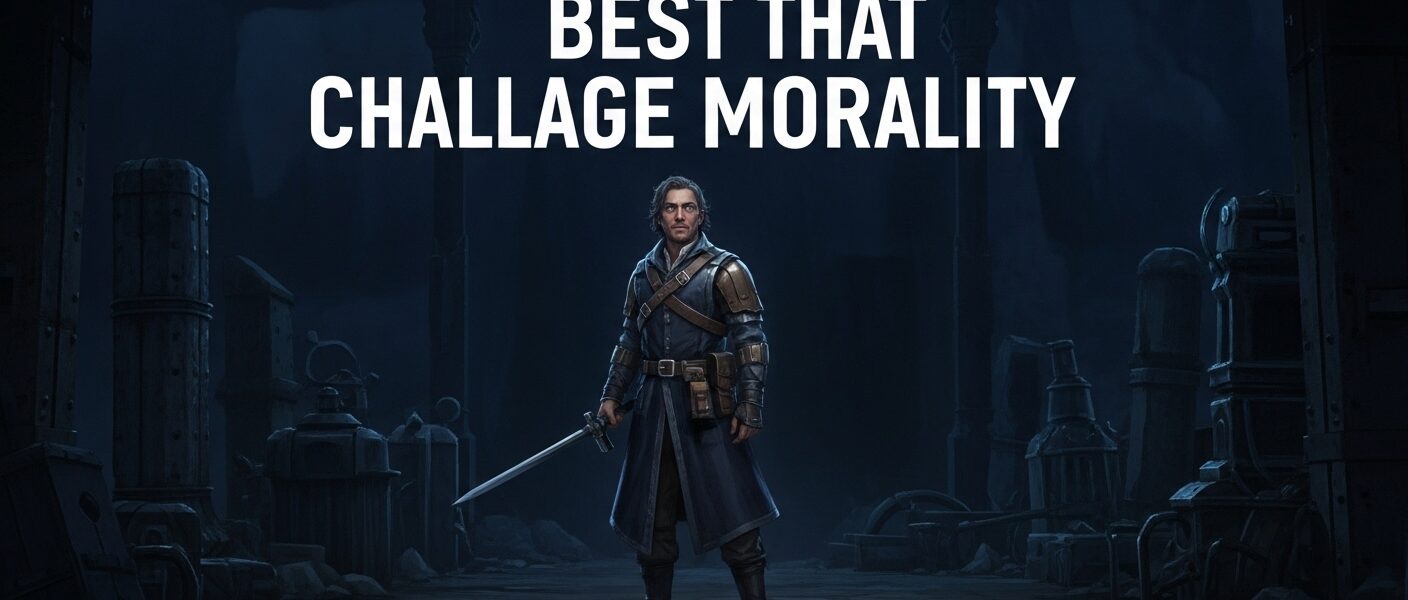
Video games are no longer just about entertainment or passing time. Over the past few decades, they have evolved into powerful tools for storytelling and self-reflection. Among the many themes explored in modern gaming, morality has become one of the most compelling. Games that challenge morality do more than provide fun; they force players to question their actions, reflect on their values, and consider the consequences of choices made in virtual worlds.
Unlike movies or books, games place players directly in control. This interactivity makes moral dilemmas much more personal and impactful. When a player is asked to decide between saving one character over another, sparing an enemy or executing them, or betraying a friend to achieve a greater goal, the weight of that decision stays with them long after the credits roll. These choices blur the line between right and wrong, reminding us that morality is rarely black and white.
This blog explores the best games that challenge morality, examining how they use gameplay, storylines, and consequences to provoke thought and self-reflection.
The Importance of Morality in Gaming
Morality in gaming is not just about making decisions; it is about examining values in a safe but impactful environment. When players make decisions in games, they often reveal aspects of their own ethical compass. These experiences become more memorable because players feel responsible for the outcomes.
Some key reasons why morality matters in gaming include:
- Player Agency: Moral decisions give players a sense of power and responsibility.
- Emotional Impact: Choices tied to values often resonate more deeply than typical gameplay.
- Replay Value: Games with multiple moral paths encourage players to replay and explore different outcomes.
- Real-World Reflection: They allow players to consider issues like justice, loyalty, and sacrifice in a unique context.
Mass Effect Series
The Mass Effect trilogy is one of the most famous examples of games that test morality. Players take on the role of Commander Shepard, tasked with uniting the galaxy against an alien threat. Throughout the series, choices matter. Do you save one group of people at the cost of another? Do you show mercy to an enemy, or wipe them out to prevent future danger?
The series uses its Paragon and Renegade system to track moral decisions. While Paragon represents diplomacy and compassion, Renegade stands for ruthlessness and pragmatism. However, the choices are never entirely clear-cut. What seems merciful might lead to unforeseen consequences, while what feels harsh could protect millions.
By the end of the trilogy, the decisions you make accumulate into a reflection of the type of leader you have become. Few games illustrate the complexity of morality as effectively as Mass Effect.
The Witcher 3: Wild Hunt
The Witcher 3 is a masterclass in storytelling and moral ambiguity. Players step into the boots of Geralt of Rivia, a monster hunter navigating a war-torn world filled with difficult choices. Unlike games with clear good-and-evil systems, The Witcher 3 thrives on shades of gray.
For instance, when helping villagers, you may defeat a monster only to discover that its death disrupts the balance of nature, causing new problems. Or when resolving political conflicts, you may realize that siding with one faction means enabling atrocities by another.
What makes The Witcher 3 remarkable is how consequences are not immediate. Hours after making a choice, players might see the fallout, forcing them to reflect on whether their decisions were wise or reckless. This delayed impact mirrors real-life morality, where the consequences of our actions are often unclear until much later.
Spec Ops: The Line
Few games confront players with moral questions as brutally as Spec Ops: The Line. At first glance, it looks like a typical military shooter. However, as the game progresses, it reveals itself as a harrowing exploration of war, responsibility, and morality.
One of the most infamous moments involves players using white phosphorus, a horrific weapon, during a battle. Afterward, players discover the devastating civilian casualties caused by their actions. Unlike many games that glamorize warfare, Spec Ops: The Line makes players confront the horror and consequences of their choices.
The game constantly blurs the line between necessity and atrocity, leaving players unsettled. It asks whether following orders justifies horrific actions, and whether doing nothing is worse than doing harm. Spec Ops: The Line challenges not just characters in the game but also the players themselves, making it one of the most morally complex experiences in gaming history.
Detroit: Become Human
Detroit: Become Human places players in a futuristic world where androids struggle for freedom and equality. The game revolves around branching storylines and decisions that determine the fate of its characters.
Every action has moral weight. Do you lead a peaceful protest for android rights, or respond violently to oppression? Do you protect your family at all costs, even if it means committing crimes? Each character’s journey forces players to reflect on questions of humanity, empathy, and justice.
The game excels at making morality feel personal. By the end, the outcomes are not simply good or bad; they depend on the values players choose to uphold. Some paths may lead to harmony, while others result in tragedy. Few games highlight the moral complexity of social justice as powerfully as Detroit: Become Human.
Undertale
Undertale is a deceptively simple game that poses profound moral questions. Players explore a world filled with monsters, but unlike traditional role-playing games, combat can be avoided. The game allows players to either kill enemies or show mercy.
What makes Undertale unique is how the game reacts to these choices. A violent playthrough results in different dialogues, altered relationships, and even a distinct ending compared to a merciful approach. The game directly addresses the player’s moral compass, questioning why they choose violence when peaceful alternatives exist.
This direct challenge to the player’s morality sets Undertale apart. It reminds players that games are not just about winning but also about how you choose to reach the end.
Papers, Please
At first glance, Papers, Please seems like a mundane game where players work as an immigration officer in a fictional country. However, it quickly becomes a test of morality.
Players must inspect documents and decide who can enter the country. The challenge arises when strict government rules conflict with human compassion. Do you follow orders and deny entry to desperate families, or do you break the rules to help them at the risk of punishment?
Each decision affects not just others but also your family, as resources are limited. The game forces players to grapple with the morality of duty, survival, and empathy in a system stacked against fairness.
Bioshock Series
The Bioshock series is known for its philosophical and moral themes. In the original Bioshock, players must decide the fate of Little Sisters, young girls altered by scientific experiments. Do you harvest them for power or save them, knowing it may weaken you in the short term?
These choices tie into the larger themes of free will, morality, and the corruption of ideals. Bioshock Infinite expands on this with questions about racism, revolution, and the cost of power.
The moral challenges in Bioshock do not simply affect gameplay; they force players to reflect on how far they are willing to go for personal gain versus doing what is right.
Fallout Series
The Fallout series places players in post-apocalyptic wastelands filled with moral dilemmas. Survival is not just about fighting mutants but also about deciding who to trust, who to help, and who to betray.
For example, in Fallout 3, players may choose whether to detonate or disarm a nuclear bomb in the heart of a settlement. In Fallout: New Vegas, players must decide which faction to support in a struggle for control, with no side being purely good or evil.
The moral ambiguity of the series highlights the difficulty of making the “right” choice in desperate circumstances. Often, players are left wondering whether survival justifies questionable actions.
Heavy Rain
Heavy Rain is an interactive drama that revolves around a serial killer known as the Origami Killer. The game challenges players to make life-or-death decisions for multiple characters.
One of the most memorable moments involves a father who must perform morally compromising tasks to save his kidnapped son. Do you commit crimes or violence in the hope of saving your child, or do you hold onto your principles and risk his life?
The game thrives on moral tension, forcing players to grapple with the limits of sacrifice and justice. Every decision leads to branching outcomes, making morality the centerpiece of the experience.
Red Dead Redemption 2
Red Dead Redemption 2 is a sprawling open-world game set in the dying days of the Wild West. Players control Arthur Morgan, an outlaw who grapples with loyalty, survival, and redemption.
The game features a morality system where choices affect Arthur’s honor. Do you rob and kill without remorse, or do you act with compassion and integrity? What makes this game special is how Arthur’s story changes depending on his moral standing, with different endings that reflect his path.
The game forces players to reflect on themes of loyalty, freedom, and the consequences of violence. It shows how morality is not just about individual decisions but also about legacy and the type of person one becomes.
Why Moral Games Are Important
Games that challenge morality are not just entertaining; they hold significant cultural value. They provide safe environments for exploring complex ethical questions, helping players consider issues like sacrifice, justice, survival, and compassion. Unlike static forms of media, games make morality interactive, giving players firsthand experience in making tough decisions.
These games also remind us that morality is not simple. Good and evil rarely exist in extremes, and sometimes the right choice comes at a cost. This complexity makes moral games powerful tools for empathy and self-reflection.
The Future of Morality in Gaming
As technology advances, morality in games will only become more sophisticated. Artificial intelligence and branching storylines allow for even more complex decision-making. In the future, games may remember players’ choices across multiple titles or adapt dynamically to their behavior, creating highly personalized moral experiences.
Virtual reality could also enhance moral dilemmas by placing players directly inside difficult situations, making their choices feel even more real. As developers continue to innovate, the blending of morality and gameplay will only grow deeper.
Conclusion
Games that challenge morality push players to go beyond winning or losing. They demand thought, reflection, and emotional investment. Titles like Mass Effect, The Witcher 3, Spec Ops: The Line, Detroit: Become Human, Undertale, and many others show that video games can be profound explorations of ethics and human nature.
By confronting players with choices that have no easy answers, these games remind us of the complexity of morality. They show that who we are in games often reflects who we are in life. As gaming continues to evolve, moral dilemmas will remain at the heart of the most memorable and meaningful experiences.
