
Introduction
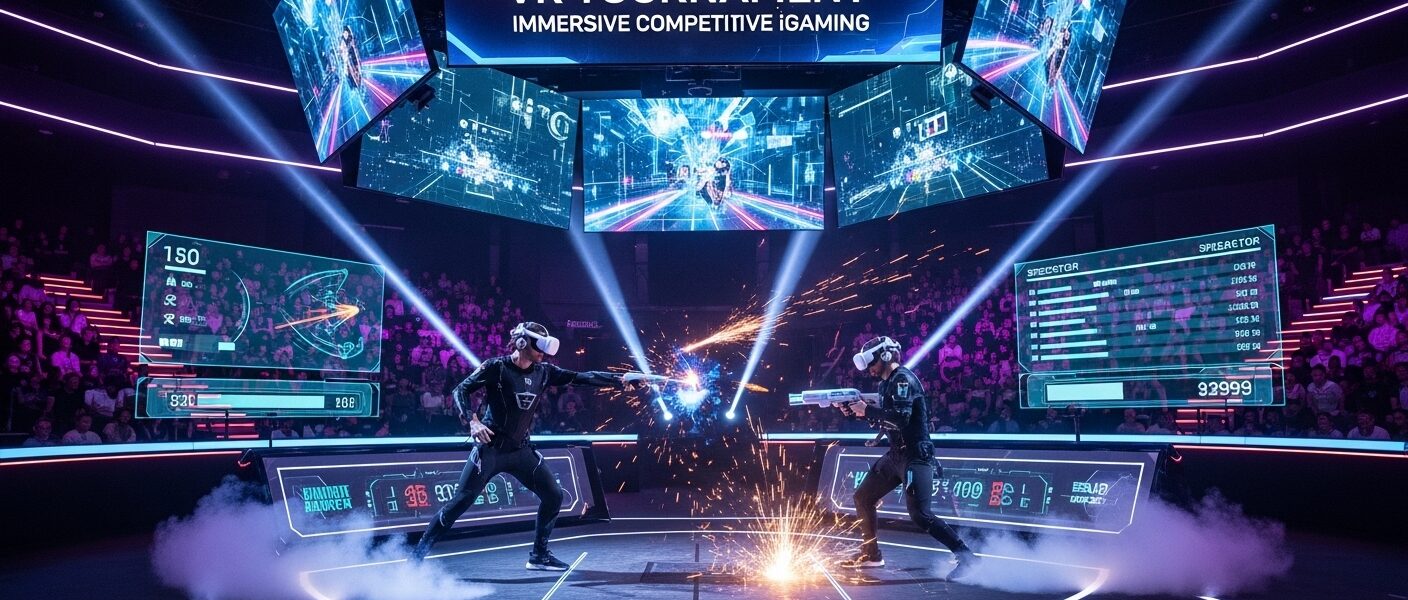
Virtual reality (VR) is redefining digital competition. VR tournaments allow players to compete in fully immersive 3D environments, bridging the gap between physical and digital gaming. This technology transforms iGaming from passive screen-based play into active, interactive experiences.
This blog explores VR tournaments, technology, benefits, challenges, and future developments.
What Are VR Tournaments?
- Players use VR headsets to enter virtual arenas.
- Tournaments cover esports, skill-based games, and virtual sports.
- Multiplayer interaction enables real-time communication and competition.
- Immersive graphics and realistic physics enhance gameplay.
Popular VR Tournament Games
- Shooter Games: VR adaptations of popular FPS titles.
- Sports Simulations: VR football, basketball, and racing tournaments.
- Puzzle & Strategy Games: Engaging skill-based VR challenges.
- Fantasy eSports: Hybrid games combining virtual worlds with traditional esports.
Technology Behind VR Tournaments
- VR headsets (Oculus, HTC Vive, PlayStation VR) with high refresh rates.
- Motion tracking sensors for realistic player movement.
- Multiplayer servers with low-latency networking.
- AI-driven matchmaking and adaptive difficulty systems.
Benefits of VR Tournaments
- Unparalleled immersion and engagement.
- Realistic interactions and social experiences.
- Encourages strategic thinking and reflex development.
- Opportunities for global competition without travel.
Challenges and Limitations
- High hardware costs for players.
- Physical space requirements for safe VR movement.
- Development costs for realistic environments.
- Motion sickness and accessibility concerns for some users.
Future of VR Tournaments
- Full metaverse integration for large-scale events.
- Haptic feedback suits for tactile gaming experiences.
- AI-enhanced adaptive gameplay for skill balancing.
- Cross-platform VR competitions for PC, console, and mobile VR users.
Conclusion
VR tournaments represent the next evolution of competitive iGaming, combining immersion, skill, and global connectivity. As hardware and software continue to improve, VR will become a mainstream platform for tournaments and competitions.